
 English
 Español
 عربى
Content
FRP is one of those three-letter abbreviations that turns up on almost every industrial building drawing, yet many experienced people have never had it explained properly. If you have ever paused in front of a roof specification and quietly wondered "what is FRP?", you are in good company, and the answer is more interesting than the acronym suggests.
In the simplest terms, FRP stands for fiber-reinforced polymer. It is a composite material: strong fibers are embedded in a polymer resin, and the two work together. The fibers carry the load, while the resin holds them in place, protects them from moisture and chemicals, and spreads stress from fiber to fiber. The result is a material that is light, tough, and far more resistant to harsh environments than ordinary steel.
What Does FRP Stand For?
FRP is the standard abbreviation for fiber-reinforced polymer. In European and British technical writing you will often see the spelling fibre-reinforced plastic, and occasionally FRTP for fibre-reinforced thermoplastic. All of these describe the same basic idea: a plastic matrix reinforced with fibers. Because the term describes a whole family rather than one recipe, the properties of an FRP part depend heavily on two choices, the fiber and the resin.
The Two Ingredients Inside Every FRP Part
- Reinforcement fibers. Glass fiber is by far the most common and economical option. Carbon fiber delivers much higher stiffness at a higher cost, while aramid fibers are chosen where impact resistance matters most.
- The polymer matrix. Unsaturated polyester is the workhorse resin, vinyl ester offers better chemical resistance, epoxy provides excellent mechanical performance, and phenolic resins are used where fire performance is critical.
- Additives. Fillers, pigments, UV stabilizers, and flame retardants are blended in to fine-tune color, weather resistance, and reaction to fire.
FRP, GRP, and "Fiberglass": What Is the Difference?
These names overlap, which causes plenty of confusion. "Fiberglass" strictly refers to the glass fiber itself, although in everyday speech it also describes the finished composite. GRP, or glass-reinforced plastic, is the precise term for a composite reinforced with glass. FRP is the umbrella term covering glass (GFRP), carbon (CFRP), and aramid (AFRP) versions. When a building products supplier says "FRP panel" or "FRP sheet", they almost always mean glass fiber in a thermoset resin.
How FRP Products Are Actually Made
There is no single manufacturing route. The process is selected according to shape, volume, and the fiber content the part needs.
- Hand lay-up, where resin and fiber mat are applied by hand, still suits large one-off shapes.
- Pultrusion pulls continuous fibers through a resin bath and a heated die to create constant profiles such as structural sections.
- Resin transfer moulding injects resin into a closed mould for consistent, repeatable parts.
- Compression moulding presses fiber and resin between matched moulds under heat.
- Continuous lamination feeds glass mat and resin onto a moving line, which is the usual route for flat and profiled building panels.
For roof panels, that continuous line matters. Resin viscosity, fiber distribution, and curing temperature all influence how evenly light passes through the finished sheet and how well it holds up under decades of sun and rain. Our own production runs on automated FRP lines, with checks that follow each batch from incoming raw material through to the packed finished panel.
What Makes FRP Worth Specifying?
Once you know what FRP is, the reasons it appears so often on industrial projects become obvious.
- A high strength-to-weight ratio, so a panel or profile can be lifted and installed by a small crew.
- Excellent corrosion resistance, which is why FRP thrives in chemical plants, wastewater facilities, and coastal sites.
- Thermal and electrical insulation, useful around equipment and in buildings with strict safety requirements.
- Design freedom, since the material can be moulded, pultruded, or laminated into almost any profile.
- Low maintenance, because there is no rust to treat and no repainting cycle to budget for.
- Translucency in the right formulation, which turns a roof panel into a source of free daylight.
FRP is not a miracle material, and honest suppliers say so. It is less stiff than steel, so deflection usually governs the design of long spans. Service temperature is limited by the resin system. And end-of-life recycling remains a genuine challenge for the whole composites industry, which is one reason careful specification and long service life matter so much.
FRP Compared with Steel, Aluminum, and Timber
The table below gives a rough sense of where FRP sits among materials commonly specified for industrial buildings.
| Material | Density (g/cm3) | Corrosion resistance | Maintenance | Relative material cost |
|---|---|---|---|---|
| FRP (glass/polyester) | 1.5 to 2.0 | Excellent | Low | Moderate |
| Carbon steel | 7.8 | Poor without coating | High | Low |
| Galvanized steel | 7.8 | Moderate | Medium | Low |
| Stainless steel | 7.9 to 8.0 | Good | Medium | High |
| Aluminum | 2.7 | Good, with galvanic care | Medium | Moderate to high |
| Timber | 0.4 to 0.8 | Poor when wet | High | Low |
The comparison explains why FRP panels are so often paired with a steel structure rather than replacing it: steel carries the frame, and FRP handles the surfaces that face weather, chemicals, and daylight.
Where FRP Appears in Real Buildings
Walk through any large industrial park and you will find FRP in more places than you expect: wall and roof cladding, gratings, handrails, cable trays, pipes, ducts, storage tanks, cooling tower components, and window profiles. In food processing, agriculture, and water treatment, the corrosion resistance is usually the deciding factor.
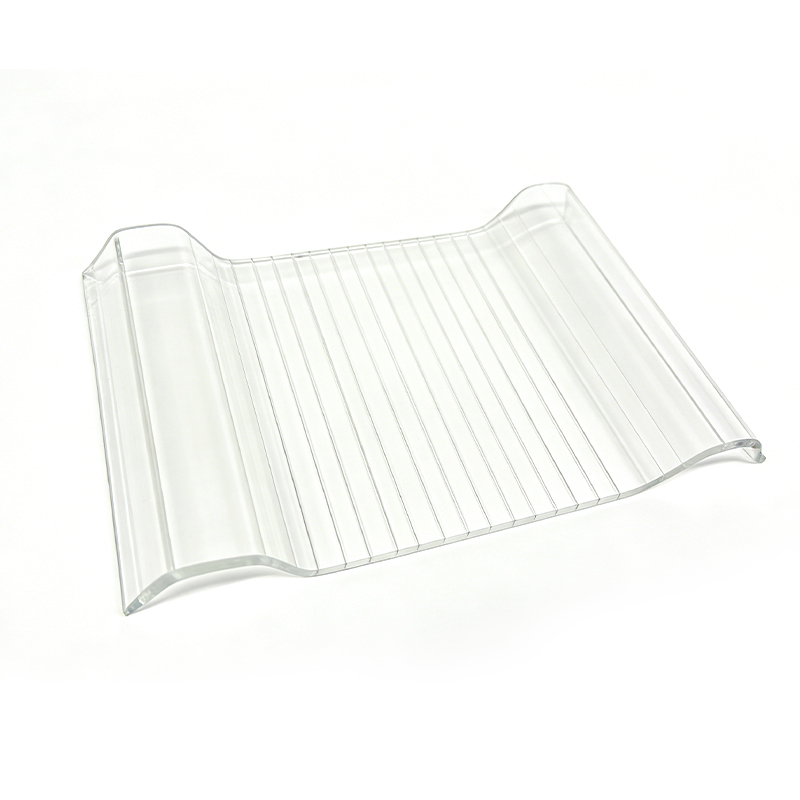
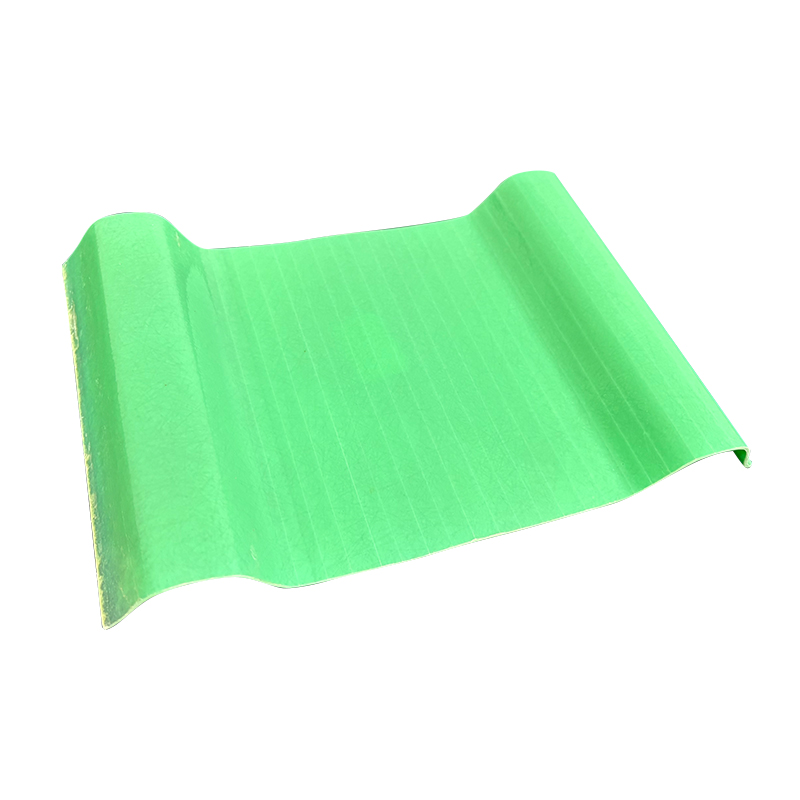
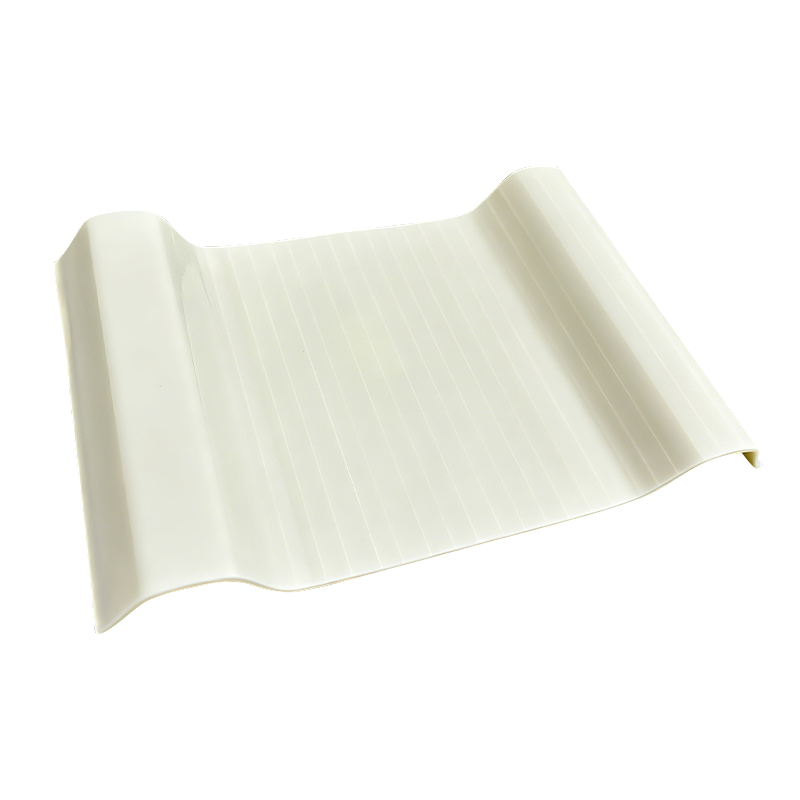
On roofs, the most visible application is the FRP daylighting panel. It replaces an opaque sheet in the roof run, letting soft, diffused light into the workshop below without the glare and heat gain of a glass skylight, and it can be profiled to match the surrounding metal sheets.
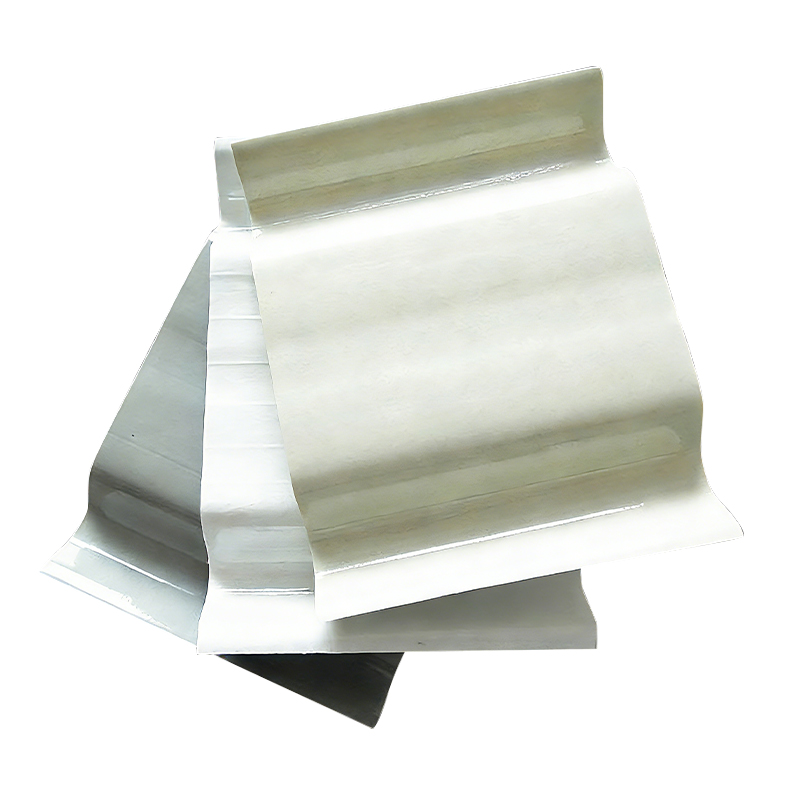
 FRP General Purpose Daylighting PanelPerformance Advantages: This FRP general purpose daylighting panel offers light transmittance options ranging from 25% to 85%, allowing accurate matching with differen...View Product →
FRP on Industrial Roofs: Daylight, Ventilation, and Fire Safety
For steel structure factories, FRP is rarely just a cladding question. It sits at the center of three requirements that are usually specified together, and this is the part of the topic where experience counts most.
Daylighting
Translucent FRP sheets are distributed across the roof in a pattern that balances even illumination against structural span. Get the ratio right and the lighting load drops noticeably; we recently looked at how energy-saving FRP daylighting panels for industrial buildings are planned in practice.
Natural Ventilation
Hot workshops need air movement, and the roof is where hot air wants to go. Roof ventilators and natural ventilation skylights use buoyancy to exhaust warm, stale air without fans or electricity, which keeps running costs predictable for decades.
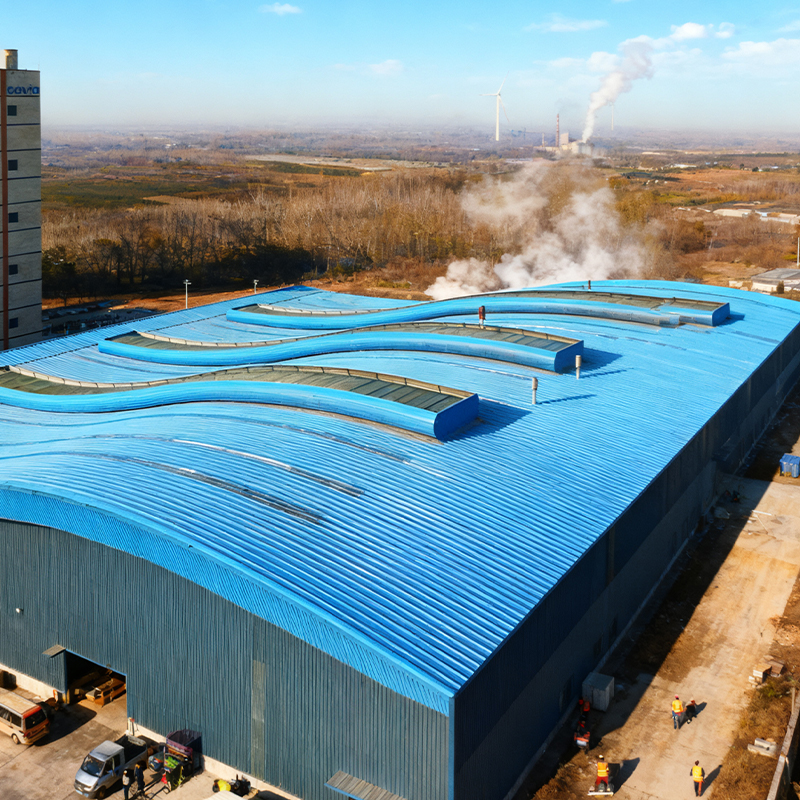 Streamlined Roof VentilatorPerformance Advantages: This streamlined roof ventilator adopts a classic and proven molded structure, delivering high overall strength with excellent resistance to wi...View Product →
Smoke Control
When fire breaks out, smoke is the immediate danger. Smoke ventilation skylights open automatically on a signal from the fire alarm system, and fusible FRP panels can drop out of their frames at a set temperature to release heat and smoke. Because the same unit can daylight and ventilate in normal operation, a single roof opening serves three duties across the building's life.
 Linear Smoke Ventilation SkylightPerformance Advantages: This linear smoke ventilation skylight features a clean and streamlined structure, arranged in a continuous linear layout that integrates smoot...View Product →
Common Questions About FRP
Is FRP the same as fiberglass?
Not exactly. Fiberglass is the glass reinforcement itself; FRP is the finished composite of fiber plus resin. In everyday conversation the two are used interchangeably, which is why datasheets usually state the fiber and resin separately.
Is FRP stronger than steel?
By weight, yes, often several times stronger. By volume, steel is generally stiffer and stronger, so FRP parts are designed with thickness and profile in mind rather than treated as a simple substitute.
Does FRP burn?
The resin is organic, so FRP can burn. Fire-retardant formulations and phenolic resins limit flame spread and reduce smoke, and these grades are normally specified wherever a roof panel forms part of a fire strategy.
How long does FRP last?
With a protective gel coat and sensible detailing, a well-made panel commonly serves for fifteen to thirty years. UV exposure, chemical contact, and installation quality are the main factors that shorten that life.
A Practical Closing Note
Understanding what FRP is takes a few minutes. Choosing the right FRP product for a particular building takes experience, because resin selection, panel profile, light transmission, and fire rating all interact. If you would like to talk through a project, look at our FRP and skylight range or send us the roof drawings. We are always glad to share what we have learned on site.
 Previous
 +86-0517-83520505

 No. 2 Xingfu Road, Sanshu Town, Huaiyin District, Huai'an City, Jiangsu Province, China
